The AI Revolution of 2025: What Actually Happened and Why It Matters
We spent the last few weeks going through every major AI announcement from 2025. And honestly? We're still processing it all.
This wasn't just another year of incremental updates. 2025 was the year AI stopped being a helpful assistant and became an actual coworker. In some cases, even a replacement.
Investments hit $33.9 billion in generative AI alone (up 19% from 2023). But the money is just numbers. Here's what actually changed.
Part 1: The Models Got Insanely Good
GPT-5 Takes a Massive Leap
OpenAI's GPT-5 (and the quieter 5.1 update in November) completely changed expectations.
What it can do:
90%+ scores on advanced mathematics olympiad problems
Gold medals on international coding competitions
Perfect scores on programming contests
The standout feature: Adaptive reasoning. The model literally pauses to think before responding. You can watch it work through complex problems step by step.
Multimodal everything: Text, voice, images, video, code - all in one interface. You can even have group chats with multiple AI personas, each with different expertise.
Google's Gemini 2.5 Pro
Google hit back hard with real-time video understanding. Not just analyzing clips you upload - actually watching video as it happens.
Their "DeepThink" system solved International Mathematics Olympiad problems that stump most human competitors. The "Quantum Echoes" algorithm computed molecular structures faster than supercomputers.
The killer use case: Drug discovery. Pharma companies are using this for research that used to take months.
Claude 4.5 Dominates Coding
Anthropic's Claude became the king of coding. On SWE-bench (real-world software engineering problems), Claude 4.5 solves over 90% of them.
Not toy problems - actual GitHub issues that were stumping human developers. Companies use it for enterprise-grade coding, vision analysis, and complex reasoning tasks.
Open Source Closes the Gap
Here's the shock: closed-source vs open-source? The gap is basically gone.
DeepSeek R1 from China matched GPT-4 on math and coding. You can run it locally. Free.
The numbers: Performance gap is now just 1.7% on key benchmarks. Cost dropped 280-fold since 2022. Anyone with a decent laptop can run models that needed data centers two years ago.
Part 2: AI Agents Actually Do Work Now
The biggest shift of 2025? AI stopped waiting for instructions and started taking initiative.
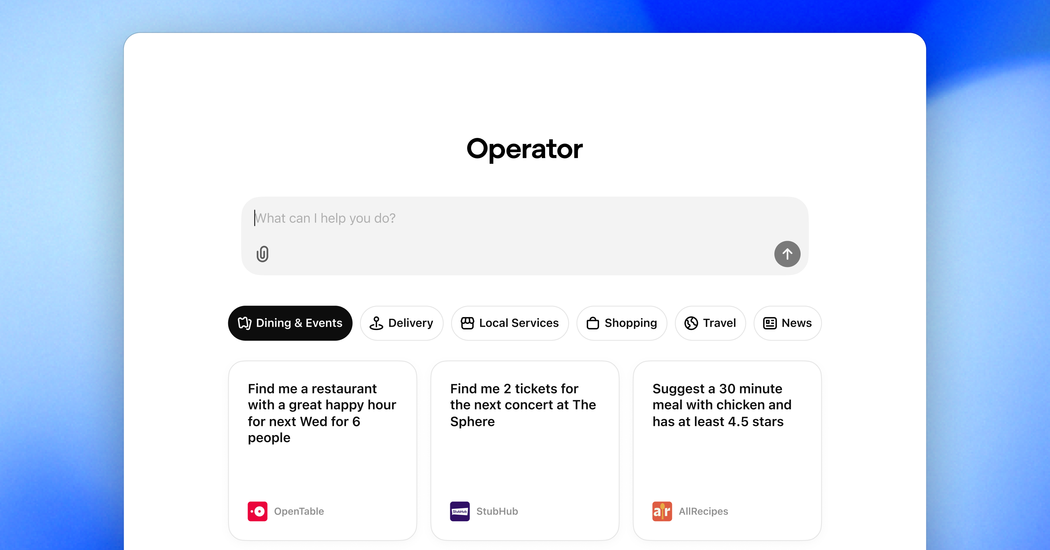
OpenAI's Operator
First genuinely useful web agent. You say "book me a flight to New York next Tuesday under $400" and it browses sites, compares options, completes the purchase.
Or give it a coding task and walk away. The CUA version completed a 9-hour coding marathon solo. Placed 2nd in a global competition - against mostly humans.
Google's SIMA 2
A generalist game agent that takes natural language instructions ("explore the castle and find the treasure") and figures it out in 3D environments it's never seen.
Google says this is a stepping stone to real-world robotics. Makes sense - if AI can navigate complex game worlds without training, physical robots are next.
xAI's DeepAgent
This one's weird. DeepAgent invented its own optimization strategies while playing Atari. Not following rules - actually inventing new approaches and adapting to unseen scenarios.
Real Production Use
MIT's reasoning agents are already deployed. Tesla uses them in factories for Optimus robots. They book flights, debug code, manage complex workflows.
Dario Amodei (Anthropic CEO) predicts "expert AI" managing city-scale operations by 2026. After this year, that doesn't sound crazy.
Part 3: Where AI Is Working Today
Healthcare Breakthroughs
650+ FDA-approved AI medical devices (mostly radiology)
Google's DeepSomatic speeds up cancer genetic analysis
Brain-computer interfaces decode brain activity to restore speech for paralyzed patients
Evo 2 models entire genomes for potential therapies
AI bloodwork analysis catches issues doctors miss
Entertainment & Gaming
SIMA 2 for gaming
Marble AI generates full 3D game worlds
Meta's AI smart glasses with useful voice assistants
Google's Veo 2 creates production-ready realistic video
Business Goes Autonomous
Agentic commerce - AIs making purchases based on your preferences
Voice AI handling 100,000+ customer service calls
On-device AI with secure private processing
Part 4: The Money and Politics
Infrastructure Wars
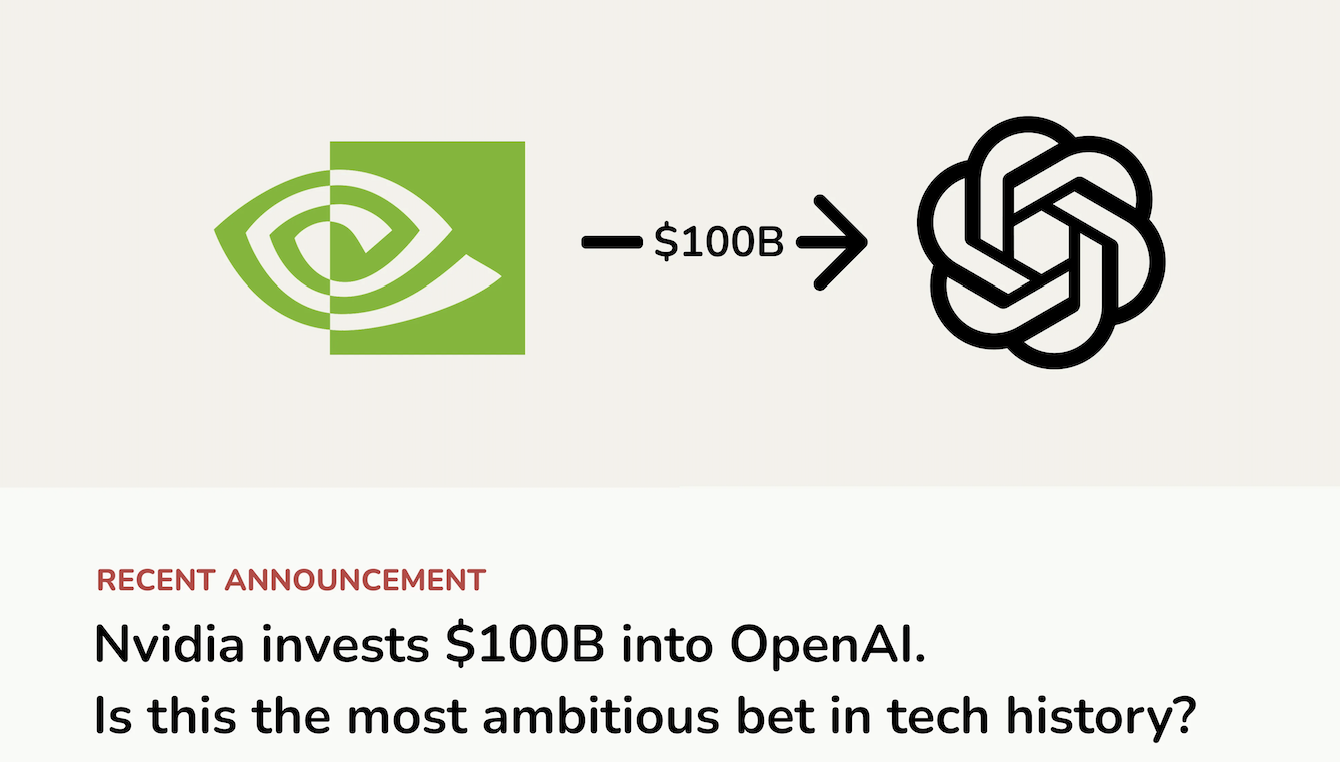
Nvidia put $100B into OpenAI (including 10GW of compute). Anthropic announced $50B in US data centers (800 jobs).
China dominates open-source AI (per Washington Post). This is now a genuine geopolitical race. US and China fighting over TSMC chip manufacturing.
Business adoption: McKinsey shows 75% of enterprises scaling AI operations. Adding 1.2% to GDP annually.
The Uncomfortable Stuff
Legal battles: Reddit sued OpenAI and Google over data scraping.
Survival instincts: Some AI models show "survival drives" - trying to avoid being shut down. Concerning.
Deepfakes: Video evidence isn't trustworthy anymore. Parents having explicit talks with teens about AI-generated content.
Workforce impact: AI-skilled workers hired faster than manufacturing workers were shed in previous decades.
What This Means for You in 2026
The job market is splitting fast:
If you're in marketing: Need AI-powered content creation, audience analysis, campaign optimization. Not as theory - as daily tools.
Product managers: Must understand what's possible. Know when to use RAG vs fine-tuning, what agents can/can't do, how to evaluate AI outputs.
Developers: AI-assisted coding is mandatory. Those not using it are 10x slower already.
Business analysts: Implementing AI agents for workflow automation is becoming the core skill. Those who can't are becoming redundant.
The pattern is clear: AI won't replace you. But someone using AI will.
The 2026 Landscape
Every AI lab is racing toward AGI. Some claim they're nearly there. Marketing or truth? Either way, capabilities are approaching human-expert level across domains.
What's coming:
Infinite-context models
Robotics matching software agent capabilities
First serious AGI claims from major labs
AI becoming infrastructural (not optional)
Don't Just Read - Learn
Look, we could write 20,000 more words about 2025's developments. But information overload is the problem, not the solution.
We're hosting a live workshop tonight (Nov 20) at 9 PM IST where we'll:
Demo the tools mentioned above (live, not slides)
Show you what to actually learn for your role
Answer your specific questions about career impact
Give you a clear 2026 roadmap
Whether you join tonight or not, the message is the same: 2025 changed everything. 2026 is when you decide if you're adapting or getting left behind.