





7 AI Tools That Changed Development in December 2025
If December 2025 feels like the month AI went into overdrive, you’re not alone. From Google rolling out agentic automation to open-weight frontier models and next‑gen video generators, this week has been packed with launches that genuinely change how developers ship products, automate workflows, and build content pipelines.
This recap breaks down the 7 most important AI tools and releases developers should know about right now, with a focus on practical use cases, who they’re for, and how they change day‑to‑day development work.
1. Google Workspace Studio – Natural Language Agents for Gmail, Drive & Chat
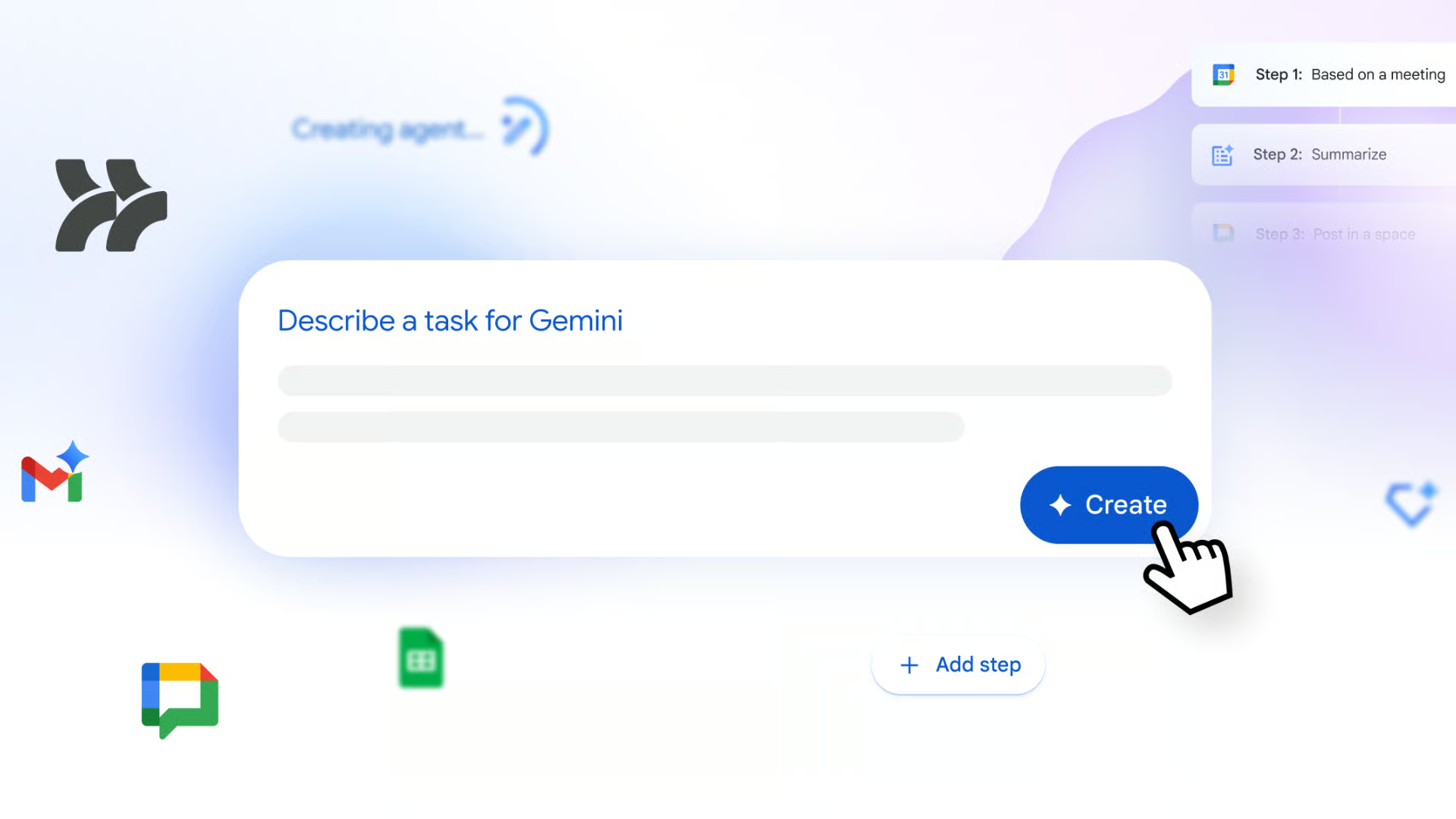
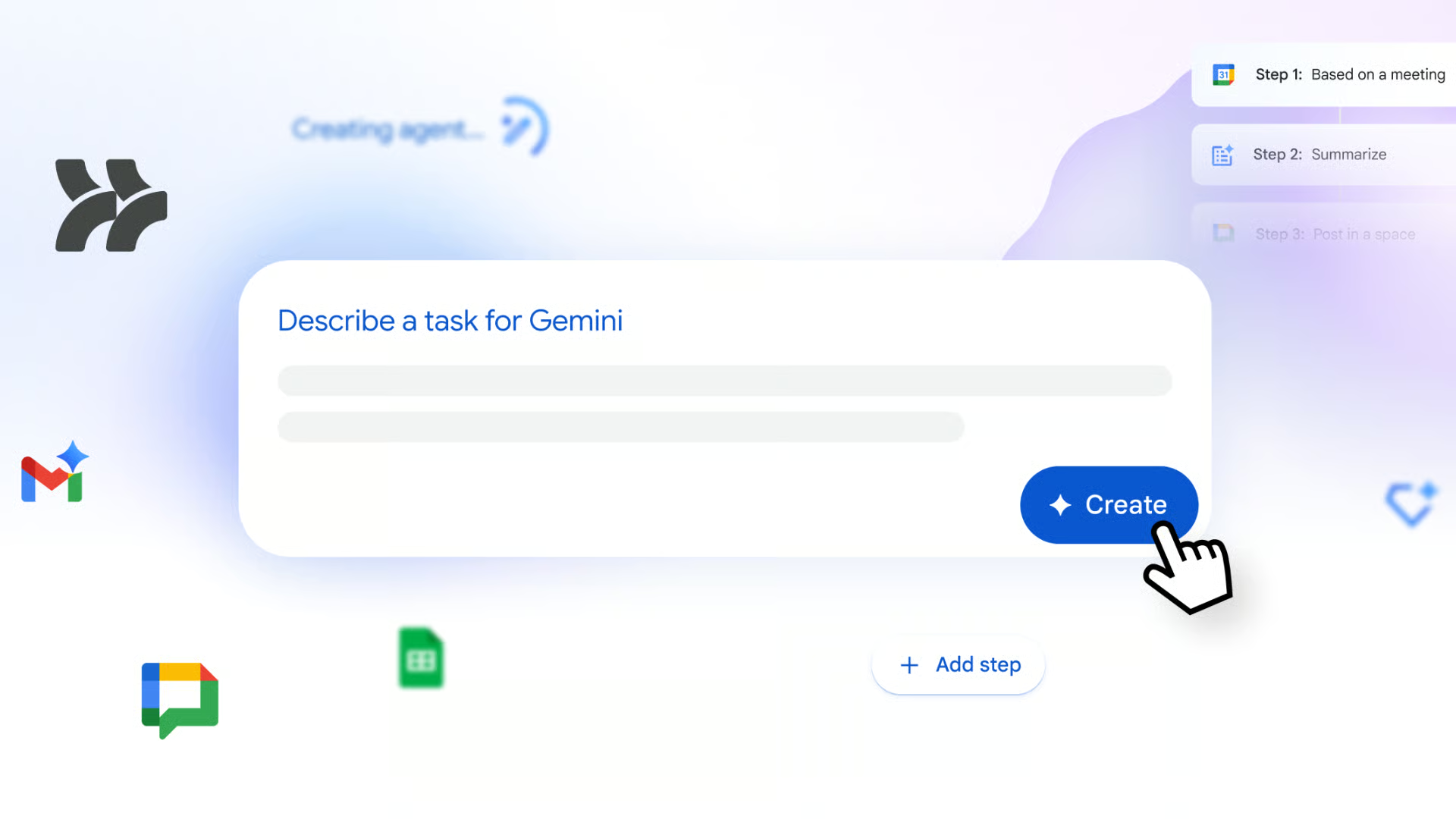
Google has launched Workspace Studio, an AI automation hub that lets anyone build powerful agents for Gmail, Drive, and Chat using simple English—no scripts, Apps Script, or workflows engines required.
Why it matters for developers
Agentic workflows without backend code: You can prototype internal tools and workflows directly inside Workspace using natural language.
Deep integrations: Native support for Gmail, Drive, Chat plus tools like Asana, Jira, Mailchimp, Salesforce turns Workspace into a programmable operations layer.
Shareable like Google Docs: Agents can be shared with teams using the same collaboration model as Docs/Sheets.
Best use cases
Auto‑triaging and routing high‑volume email inboxes
Multi‑step approval flows (e.g., legal, finance, vendor onboarding)
Daily standup digests across Jira, GitHub, and Docs
Founder/operator “ops co‑pilot” without needing an internal tools engineer
Try it: https://workspace.google.com/studio/
2. DeepSeek V3.2 & V3.2 Speciale – High‑Efficiency Reasoning for Agents
DeepSeek has released V3.2 and V3.2 Speciale, two reasoning‑focused models designed for tool‑use, long context, and agentic workflows. After a quiet period, this clearly signals they’re back in the frontier‑model race.
Don't just use ChatGPT. Learn to build custom LLM agents, RAG pipelines, and full-stack Agentic AI apps in our intensive 6-week program.
Why it matters for developers
Thinking vs non‑thinking modes: You can choose between fast responses and deeper “chain‑of‑thought” style reasoning depending on the task.
Built for agents: These models are explicitly tuned to run tools, orchestrate actions, and generate synthetic training data for multi‑agent systems.
Long context + sparse attention: Their DSA‑based sparse attention helps keep long‑context performance usable and efficient.
Best use cases
Research assistants that call tools, scrape, and summarize large corpora
Multi‑agent systems for data labeling, synthetic data generation, or evals
Cost‑efficient alternatives to GPT‑5‑class models for reasoning‑heavy backends
Try it: https://huggingface.co/deepseek-ai/DeepSeek-V3.2
3. Gemini 3 Deep Think – Google’s Highest‑Precision Reasoning Mode
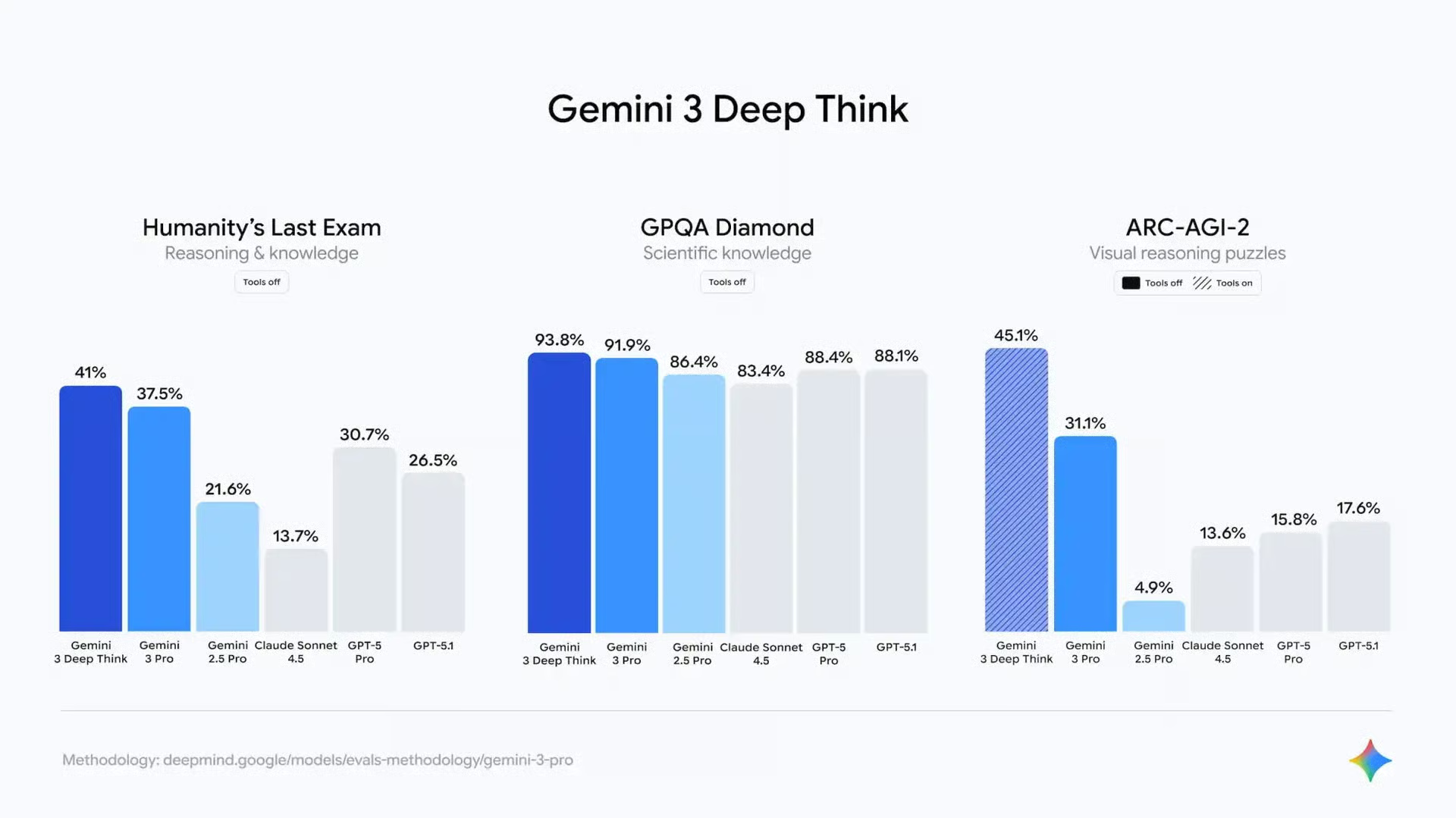
Google is rolling out Gemini 3 Deep Think to AI Ultra subscribers, a dedicated mode for long‑form, high‑precision reasoning across math, science, and multi‑step logic.
Why it matters for developers
Frontier‑level reasoning: Currently top‑performing on ARC‑AGI‑2 and designed to tackle IMO/ICPC‑style problems.
Parallel hypothesis exploration: Deep Think explicitly spends more compute exploring multiple solution paths before answering.
Integrated in Gemini app: No separate API needed to experiment—just switch to Deep Think with Gemini 3 Pro.
The only comprehensive program designed to take you from basic prompting to building interactive Artifacts, custom integrations, and deploying production-ready code with Claude Code.
Best use cases
Building high‑stakes AI copilots for engineering, quant, or research workflows
Verifying proofs, derivations, or complex business logic
Running long‑context analytical tasks that require low hallucination rates
Try it: https://gemini.google.com/app
4. Kling 2.6 – Native Audio + Video Generation in One Pass
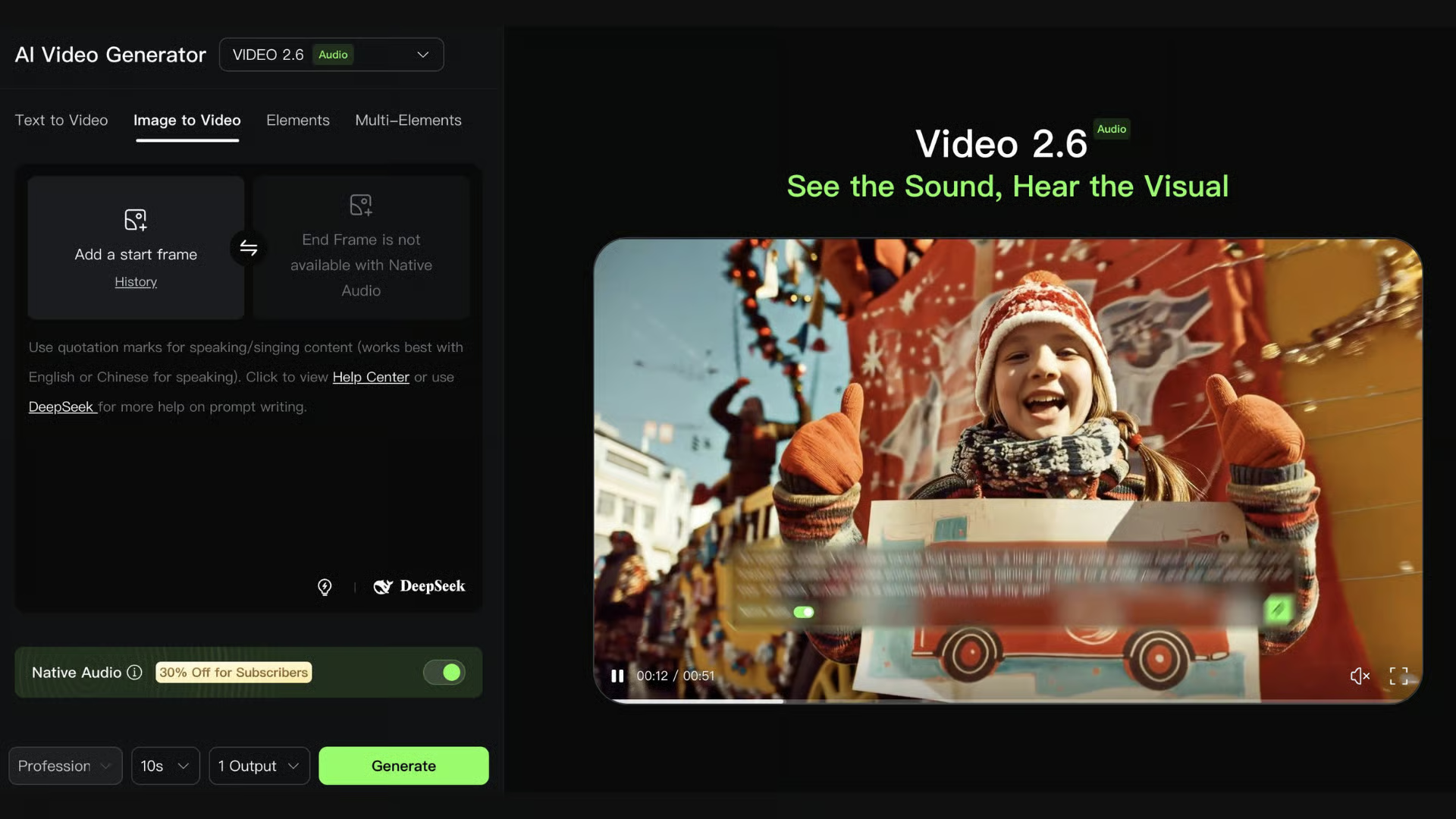
Kling 2.6 introduces true audio‑visual generation: it can produce video, dialogue, ambient sound, and sound effects in a single generation step.
Why it matters for developers and creators
End‑to‑end generation: No more bolting TTS or SFX on top—Kling can output cohesive video + audio in one shot.
Better lip‑sync and motion: The update significantly improves lip‑sync, motion sharpness, and layered audio.
English + Chinese support: Good fit for global content, especially in short‑form formats.
Best use cases
Auto‑generated short ads, TikTok/Reels/Shorts, and UGC‑style content
Explainer videos where scripts → visual + voice + SFX in one pipeline
Automated video production pipelines for marketing and onboarding content
Try it:
https://app.klingai.com/global/image-to-video/frame-mode/new?klingVersion=2.6
5. FLUX.2 – Image Gen Suite That Targets Nano Banana Pro & Midjourney

Black Forest Labs has shipped FLUX.2, a suite of image models designed to compete directly with Nano Banana Pro, Midjourney, and Google’s imaging stack.
Why it matters for developers
Multi‑reference conditioning: Up to 10 reference images for consistent characters, layouts, and brand identity.
4‑megapixel generation + editing: High‑res output suitable for production‑grade design workflows.
Open VAE (Apache‑licensed): A standard latent space across Pro, Flex, Dev, Klein tiers simplifies tooling and ecosystem integrations.
Best use cases
Brand‑consistent campaigns, product renders, and structured design systems
Open‑source or self‑hosted image gen stacks for enterprises
Tools that need reliable text rendering and spatial accuracy (UX mocks, packaging, OOH layouts)
Try it: https://playground.bfl.ai/image/generate
6. Mistral 3 Family – Open‑Weight Frontier + Nine “Ministral” Models
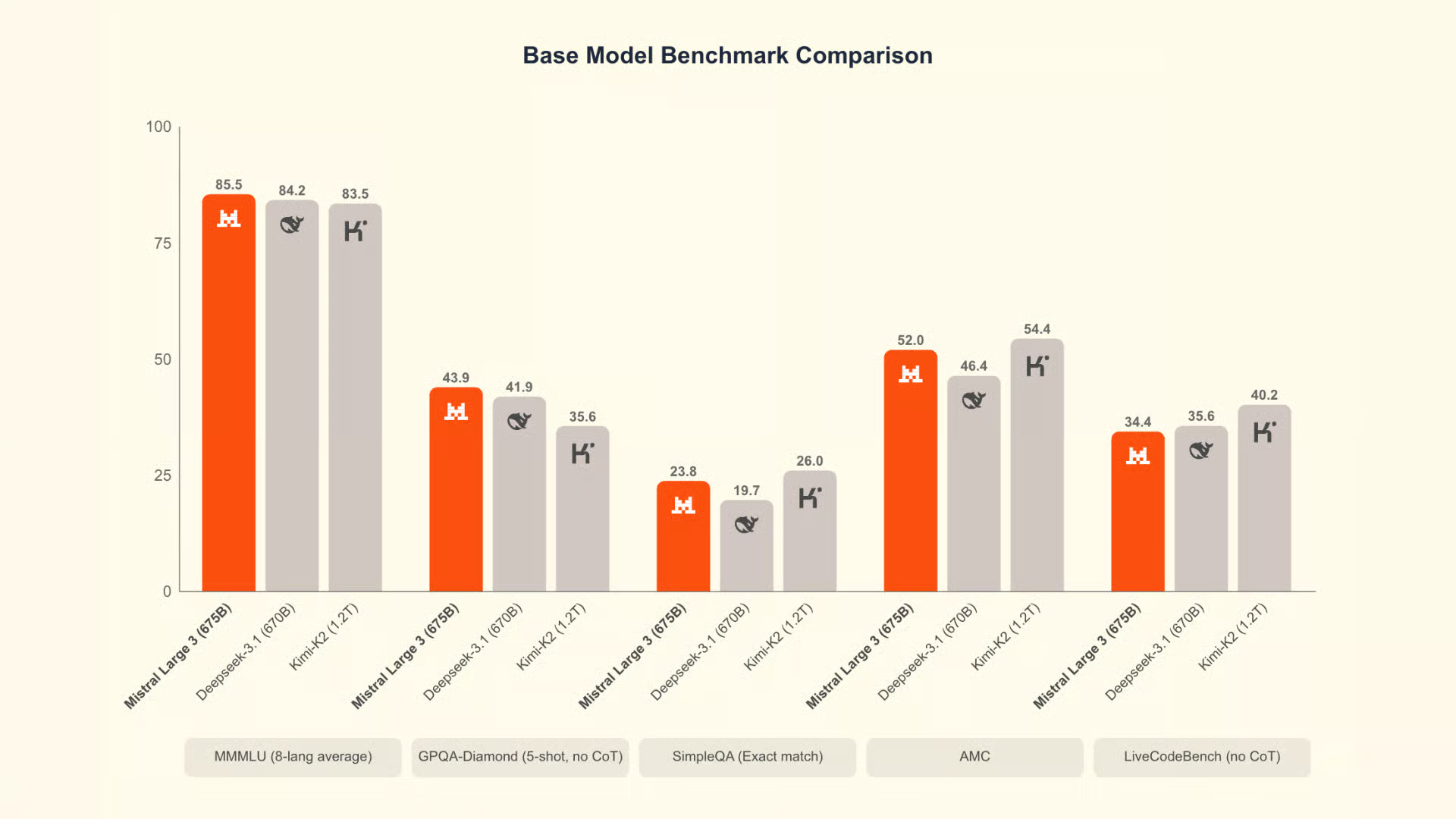
Mistral’s new Mistral 3 family combines one large multimodal model with nine smaller open‑weight models (Ministral 3 series) optimized for specific constraints.
Why it matters for developers
Mistral Large 3: 41B active parameters, multimodal, multilingual, with a 256k context window—frontier‑class while still deployable.
Ministral 3 (3B, 8B, 14B): Base, Instruct, and Reasoning variants designed for specialization, single‑GPU deployment, and fine‑tuning.
Open‑weight philosophy: Strong fit for teams that care about data control, offline use, compliance, or heavy customization.
Best use cases
Enterprise assistants, document analysis, and internal copilots
Robotics/edge and offline AI where closed APIs are not viable
Teams experimenting with fine‑tunes for niche verticals or languages
Try it: https://mistral.ai/
7. Runway Gen‑4.5 – Text‑to‑Video with Realistic Physics & Cinematic Output
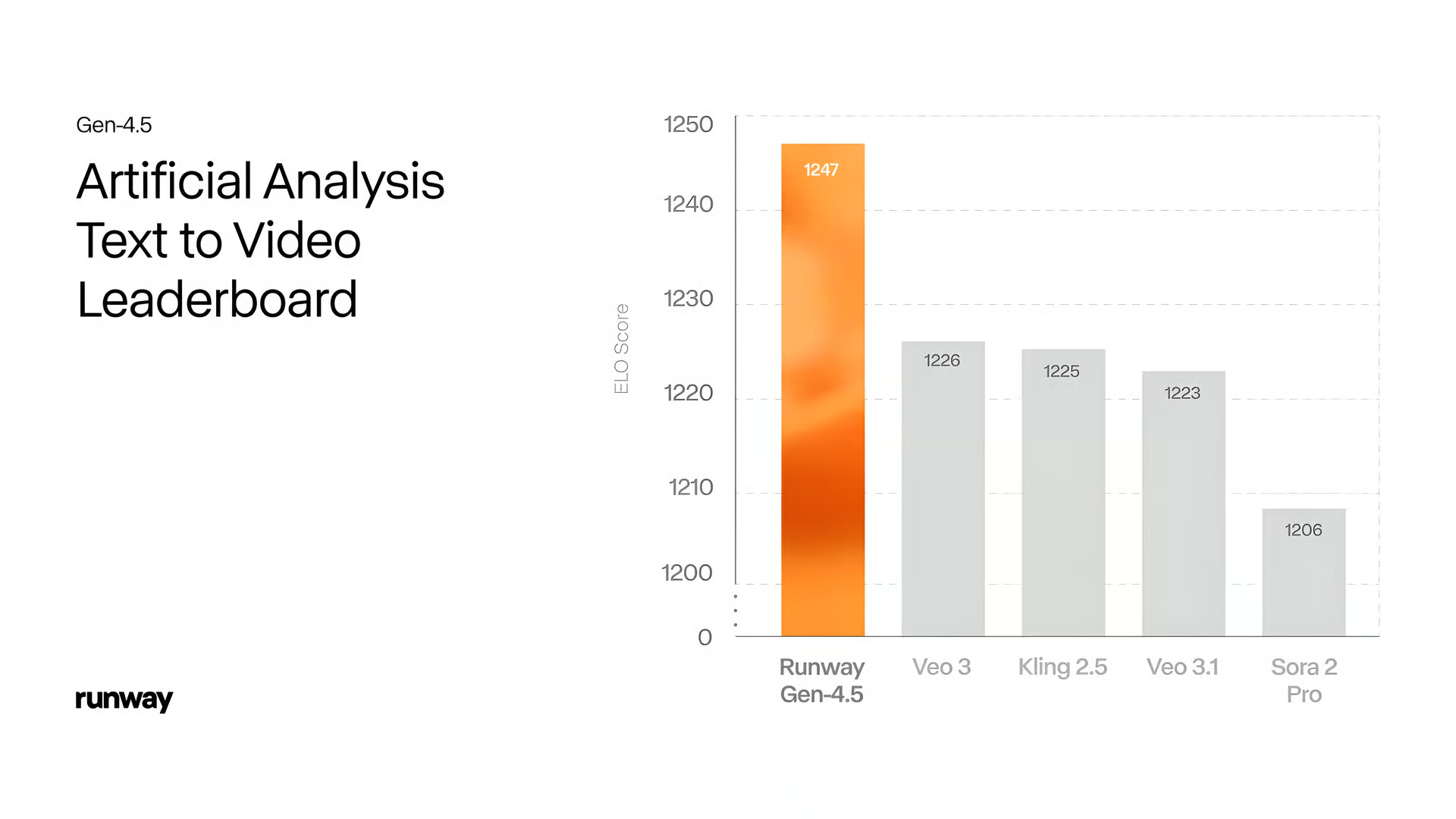
Runway’s Gen‑4.5 pushes text‑to‑video closer to production‑ready quality, with a focus on physics fidelity, prompt adherence, and visual consistency.
Why it matters for developers and studios
Realistic motion: Objects move with believable weight, momentum, and physical interactions; liquids flow naturally.
Cinematic controls: Supports highly stylized, photorealistic, and cinematic looks suitable for concepting and pre‑viz.
Same speed class as Gen‑4: Improvements without major latency regression.
Best use cases
Cinematic concept videos, VFX pre‑visualization, and storyboarding
High‑quality social or brand content without full production teams
Experimentation with physics‑aware simulations and generative worlds
Try it: https://runwayml.com/
How These 7 Tools Change Day‑to‑Day Development
Across these launches, a few clear trends emerge for developers and technical teams:
Agentic workflows are now mainstream: Workspace Studio + DeepSeek V3.2 + Mistral 3 make it much easier to build agents that call tools, orchestrate workflows, and live next to where users already work.
Reasoning is becoming a product surface, not just a benchmark: Gemini 3 Deep Think and reasoning‑tuned open‑weights move advanced reasoning from research to everyday apps.
Audio‑visual generation is converging: Kling 2.6 and Runway Gen‑4.5 show where creative tooling is heading—one prompt to video, sound, and style.
Open vs closed is now a strategic choice, not just a cost decision: FLUX.2 and Mistral 3 give serious open‑weight options for teams that need control, compliance, or customisation.
For developers, the opportunity in December 2025 isn’t just “try new models”—it’s to rethink architecture:
Replace brittle glue code with agentic workflows
Move from single‑model backends to model portfolios (open + closed)
Bake richer reasoning into product flows where correctness matters
Add audio‑visual experiences to products that used to be text‑only
If you’re building in AI right now, this is one of those weeks where your roadmap can—and probably should—shift.
Master Generative AI in Just 8 Weeks
Want to go from AI news consumer to AI builder? Join the GenAI Launchpad by Build Fast with AI.
Gain hands-on, project-based learning with 100+ tutorials, 30+ ready-to-use templates by Satvik Paramkusham (IIT Delhi alum).
start building real-world AI solutions today.
👉 Enroll now: www.buildfastwithai.com/genai-course
⚡ Limited seats available!
Resources & Community
Join our vibrant community of 12,000+ AI enthusiasts and level up your AI skills—whether you're just starting or already building sophisticated systems. Explore hands-on learning with practical tutorials, open-source experiments, and real-world AI tools to understand, create, and deploy AI agents with confidence.
Website: www.buildfastwithai.com
GitHub (Gen-AI-Experiments): git.new/genai-experiments
LinkedIn: linkedin.com/company/build-fast-with-ai
Instagram: instagram.com/buildfastwithai
Twitter (X): x.com/satvikps
Telegram: t.me/BuildFastWithAI

